COMMERCIAL GROWTH SYSTEM

The 10-Step
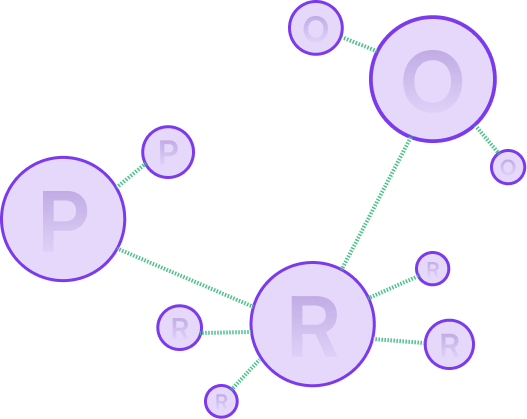
P.R.O. Framework

A Structured Commercial Growth System

Every engagement follows the same structured methodology designed to improve commercial performance, accelerate pipeline development, and build scalable revenue operations. Each step builds upon the previous one.

Identify Your Constranints

Identify Your Highest- Priority Constraint

You do not need to fix all ten areas at once. Most organizations have one or two constraints creating disproportionate commercial drag. The P.R.O Index identifies where those constraints exist and establishes a practical starting point.

Market Performance Engineering

Improve how your company is discovered, researched, and evaluated by prospective asset buyers. We align website technical architecture, non-branded organic visibility, and next-generation Answer Engine Optimization (AEO).

Pipeline Ramp Activation

Convert market attention into highly qualified enterprise contract opportunities through structured data harvesting, account-based targeting, and disciplined field sales enablement playbooks.

Workflow Output Automation

Reduce front-office administrative drag and manual handoff errors through robust enterprise CRM configuration, smart routing logic, and real-time leadership analytics matrices.

The 10-Step P.R.O. Framework

A Structured Commercial Growth System

Every engagement follows the same structured methodology designed to improve commercial performance, accelerate pipeline development, and build scalable revenue operations. Each step builds upon the previous one, creating a repeatable system that helps industrial companies measure, prioritize, execute, and continuously improve.

PERFORMANCE

Growth Intelligence Foundation

01

Purpose:
Establish a clear baseline of the business, brand, market position, commercial maturity, and highest-priority growth constraints.

Focus Areas:
Stakeholder reach · Authority content · Campaign activation

ICP Coverage

02

Purpose:
Define the industries, facilities, buyers, operational needs, and accounts most likely to create profitable growth.

Typical Activities
Market segmentation · Buyer alignment · Account prioritization

RAMP

Account Engagement

03

Purpose:
Build awareness and credibility with the right accounts through relevant messaging, technical authority, and coordinated outreach.

Typical Activities
Stakeholder reach · Authority content · Campaign activation

Qualified Opportunities

04

Purpose:
Focus commercial resources on opportunities with the strongest technical, financial, and organizational fit.

Typical Activities
Qualification discipline · Deal-risk assessment · Pursuit prioritization

Pipeline Velocity

05

Purpose:
Remove bottlenecks and improve the speed, consistency, and predictability of opportunity progression.

Typical Activities
Stage discipline · Proposal movement · Forecast reliability

Meeting Conversion

06

Purpose:
Turn customer meetings into clearer decisions, stronger alignment, and measurable next steps.

Typical Activities
Meeting preparation · Discovery quality · Follow-up execution

Account Penetration

07

Purpose:
Expand revenue within existing customers by strengthening relationships, increasing facility coverage, and identifying adjacent opportunities.

Typical Activities
Stakeholder depth · Installed-base growth · Multi-site expansion

OUTPUT

Revenue Operations

08

Purpose:
Create consistent commercial execution through clear processes, ownership, CRM standards, routing, and governance.

Typical Activities
Process consistency · CRM effectiveness · Commercial visibility

Intelligent Automation

09

Purpose:
Reduce repetitive work and administrative drag by automating standardized commercial workflows.

Typical Activities
Workflow automation · System integration · Administrative efficiency

Performance Optimization

10

Purpose:
Measure results, identify new constraints, and continuously improve the commercial operating system.

Typical Activities
Performance measurement · Process refinement · Continuous improvement

How the Steps work together

The steps are connected, but they are not always completed in a rigid sequence.

Performance

Establishes the foundation.

Ramp

improves how opportunities are created, qualified, advanced, and expanded.

OUTPUT

Strategic meeting to review findings, validate priorities, and determine the best next step.

FieldForge uses the P.R.O Index to identify where the greatest constraint exists and prioritizes the steps that will create the most immediate commercial impact.

How FieldForge Works

The FieldForge Operating Cycle

Every engagement follows the same improvement cycle: analyze the current state, develop the solution, execute the work, and optimize based on results.

Analyze

Diagnose the current state of the business, market, pipeline, process, and operational system.

Develop

Build the frameworks, messaging, assets, checklists, and recommendations needed to improve the system.

Execute

Turn the strategy into action through campaigns, sales assets, workflows, and implementation-ready deliverables.

Optimize

Review performance, identify what is working, and refine the system so improvements compound over time.